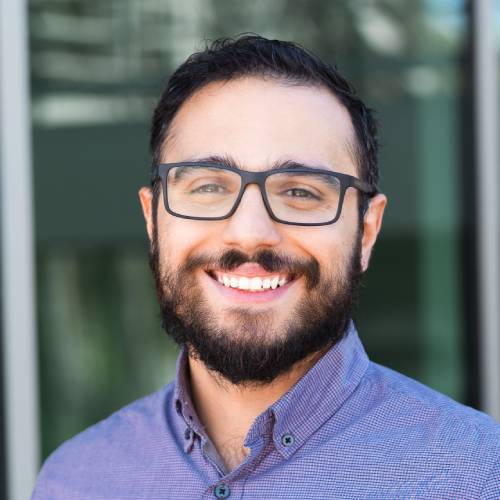
William G. Nomikos — Associate Professor of Political Science, University of California, Santa Barbara
I write about the politics of international intervention. My first book, Local Peace, International Builders: How the UN Builds Peace from the Bottom Up, examines the conditions under which international actors successfully bring order, peace, and stability to fragile settings. My follow up work on this subject examines what peacekeepers can do to mitigate climate change-induced social conflict in weakly institutionalized settings.
My research also examines how international actors shape the development of political institutions in places recovering from war. I study when foreign intervention helps democracy take root, why elites agree to share power after conflict, and how citizens come to trust new governments. This research draws on archival data from historical occupations as well as field research in contemporary settings of intervention.
I also conduct research on how foreign policy shapes public opinion in democracies, specifically as related to intervention in civil wars abroad. My most recent work on this subject uses large language models to investigate the role of misinformation campaigns in shaping social media reactions to the wars in Afghanistan and Ukraine.
I occasionally write informal thoughts on international intervention on my Substack, Borrowed Peace.
I received my Ph.D. in Political Science from Yale University in May 2019.

Book
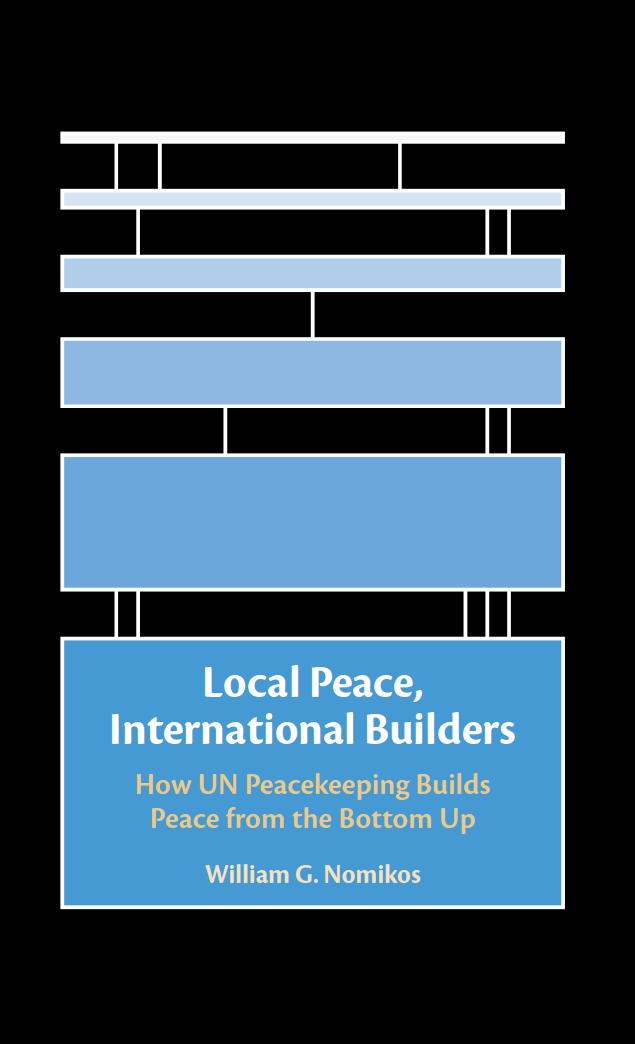

"With careful fieldwork, experiments, cross-national analyses, and in-depth case studies, Nomikos provides compelling evidence that UN peacekeepers are uniquely capable of reducing communal violence. Readers will gain a novel perspective on the role of peacekeeping."
"Through an artful combination of research methods, Nomikos underscores the importance of peacekeeper impartiality. Citizen perceptions of peacekeepers, we learn, make an enormous difference in the effectiveness of post-conflict recovery. Both scientific and optimistic, this book is a model for the next generation of peacekeeping research."
"How do UN peacekeepers keep the peace? Using interviews with local leaders and peacekeepers, behavioral games, surveys, and georeferenced data on troops, Nomikos finds that when peacekeepers are viewed as impartial, they de-escalate local conflicts. A must-read for anyone interested in peacekeeping."
DAPP Lab
I direct the Data-driven Analysis of Peace Project (DAPP), a lab that brings together researchers working on international security, conflict processes, and peacebuilding.
